

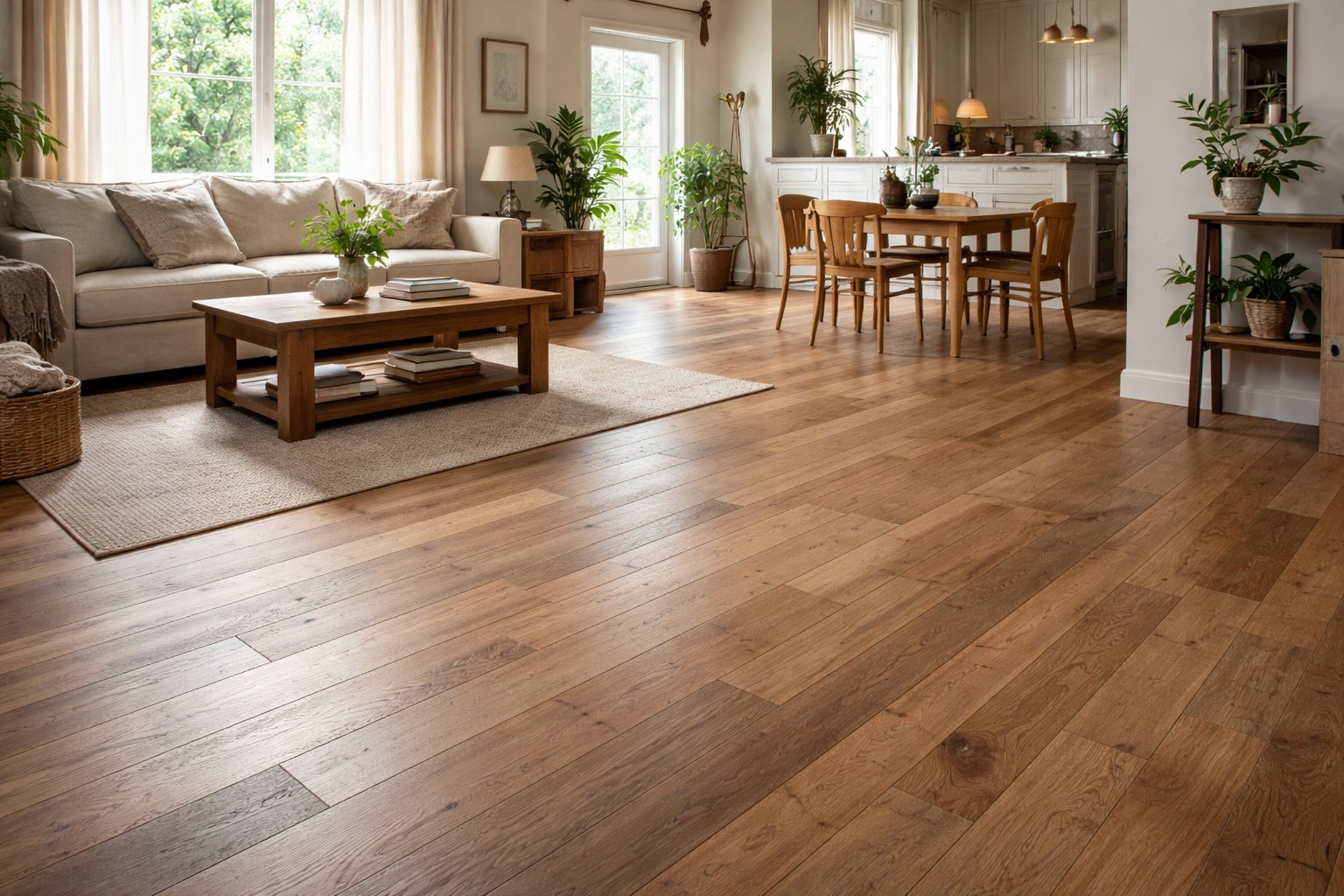
In Corinth, TX, slab foundations are the standard for residential construction. While concrete slabs offer long-term durability, they introduce specific challenges when installing engineered hardwood. Installation success depends not just on the flooring material, but on how the slab is evaluated, prepared, and managed throughout the process. When slab conditions are handled correctly, engineered hardwood can perform exceptionally well over concrete. When they are ignored, issues often appear long after installation is complete.
Understanding how slab foundations influence engineered hardwood installation helps homeowners make informed decisions that protect both performance and appearance.
How slab foundations affect moisture movement
Concrete slabs sit directly on the ground, which means moisture vapor can move upward through the slab over time. Even slabs that feel dry on the surface may still release moisture gradually, especially during seasonal humidity shifts common in North Texas.
Because engineered hardwood contains real wood layers, this moisture interaction must be addressed properly. Reviewing material-specific guidance found on engineered hardwood flooring pages helps clarify which constructions are designed to handle slab conditions more effectively.
Moisture testing is critical before installation begins
Visual inspections are not enough when dealing with slab foundations. Professional moisture testing measures vapor emission and internal moisture levels within the concrete, not just surface dryness.
The results determine whether additional moisture mitigation systems or specialized adhesives are required. Skipping this step is one of the most common causes of long-term flooring failure in slab homes.
Slab flatness plays a major role in floor stability
Concrete slabs are rarely perfectly flat, even in newer homes. Small height variations can cause engineered hardwood planks to flex, sound hollow, or separate over time.
Proper slab preparation may include grinding high spots or applying leveling compounds to create a uniform surface. This step is often what separates a floor that feels solid from one that never quite settles.
Selecting the right installation method for slab homes
Engineered hardwood offers installation flexibility, but slab foundations limit which methods perform best long-term. Glue-down installations are commonly preferred over slabs because they reduce movement and improve stability. Floating installations can also work when paired with moisture-rated underlayments designed for concrete subfloors.
Understanding how slab installations differ from other systems—similar to the considerations outlined in laminate flooring information—helps set realistic expectations for performance and maintenance.
Product construction matters more on concrete slabs
Not all engineered hardwood is built the same. On slab foundations, plank construction becomes especially important. Multi-ply cores, balanced layer designs, and stable backing materials help reduce movement caused by moisture fluctuations beneath the slab.
Wider planks and thicker wear layers may look appealing, but they must be matched with appropriate core stability to perform well over concrete.
Acclimation behaves differently in slab-based homes
Acclimation is still necessary, but slab installations require controlled indoor conditions before flooring arrives. HVAC systems should be running consistently so temperature and humidity levels remain stable.
The goal is to allow the engineered hardwood to adjust to the living environment it will remain in long term, minimizing expansion or contraction after installation.
North Texas soil conditions increase the importance of preparation
Corinth’s clay-heavy soil expands and contracts with moisture changes, which can subtly influence slab behavior throughout the year. While engineered hardwood is more dimensionally stable than solid wood, local soil conditions reinforce the need for proper moisture testing, slab preparation, and installation planning.
Homes that experience flooring issues on slabs often trace the problem back to skipped prep steps rather than the flooring material itself.
Long-term success comes from a system-based approach
Successful engineered hardwood installation over slab foundations depends on a complete system: moisture testing, slab preparation, product selection, correct installation method, and stable indoor conditions. When each step is handled properly, engineered hardwood performs reliably in slab homes for decades.
Ignoring even one of these steps increases risk—especially in North Texas environments.
Schedule a professional slab evaluation
For slab homes in Corinth, engineered hardwood success starts with expert evaluation. Schedule a free on-site estimate or consultation through our contact page to review slab conditions, product options, and installation methods that protect long-term performance. Our flooring experts handle every step with precision to ensure results that last.


